
The Geography of Loss
Station ElevenThe characters move through a world where distance, borders, and travel change from conveniences into sources of danger and longing.
increasing Bearing strength in each event
 decreasing
Bearing strength in each eventdecreasingThe Last Easy Flights

The Last Easy Flights
A connected world
Miranda travels from New York to Toronto and onward to Asia, while Arthur expects to move between cities for work and family. Air travel makes distant relationships seem practically manageable.
A fragile assumption
The characters treat flights and communications as ordinary supports. Their later absence reveals how much of personal life depended on systems that appeared permanent.
The Flightless Exodus
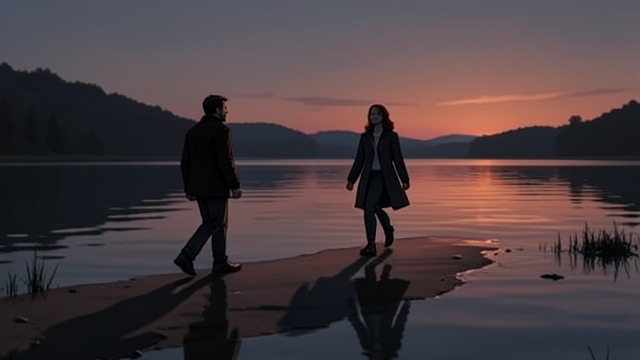
The Flightless Exodus
Movement without direction
People flee cities on foot and in cars, but roads become blocked and fuel runs out. Crossing a border no longer guarantees safety from the illness.
A new scale of distance
Jeevan walks along the lake, and Kirsten travels with Peter toward the United States. The journeys replace rapid transportation with exhaustion and exposure.
A World without Borders
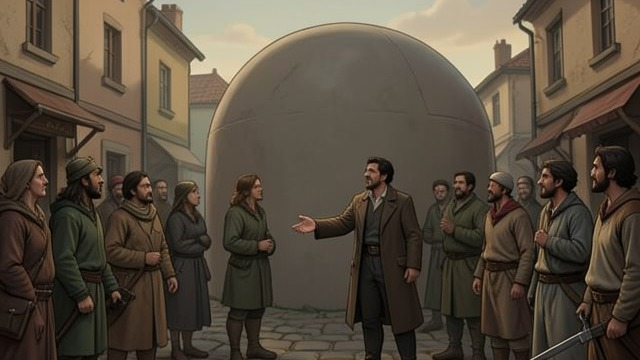
A World without Borders
States withdraw
The novel’s account of the changed world describes unmanned borders and the disappearance of national systems. People organize around settlements rather than countries.
Local belonging
The Symphony must negotiate entry town by town. Safety now depends less on citizenship than on whether a community trusts strangers.
The Airport as Home
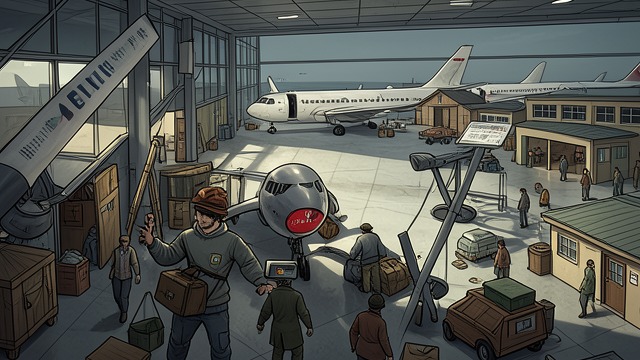
The Airport as Home
Transit becomes settlement
Passengers at Severn City Airport stop expecting to board planes and build lives among the grounded aircraft. The terminal’s layout becomes shelter, school, and museum.
A changed meaning of travel
The planes remain visible as reminders of impossible mobility. The airport preserves the idea of worldwide connection even when no one can act on it.
Lights Across the Horizon
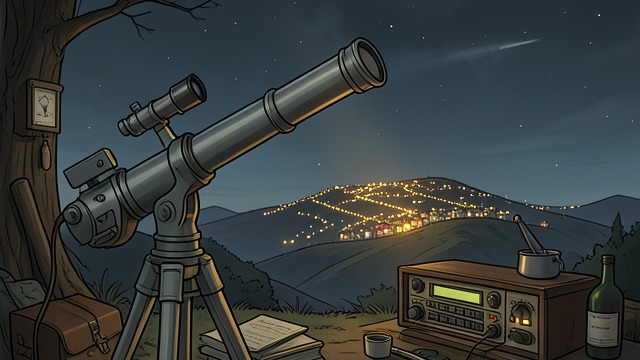
Lights Across the Horizon
A settlement discovered
Kirsten looks through a telescope and sees a distant community illuminated by electricity. The lights suggest that some form of power and organized life has returned nearby.
A new horizon
The discovery does not restore airplanes or the old global network, but it widens the imaginable future. A world that seemed permanently dark may contain other communities and new connections.
The weeks before the Collapse
The first months after the Georgia Flu
The first years after the Collapse
From the first winter onward
Year Twenty, near the novel’s ending
